Krystyna Wojtyna-Drouet – I Do Not Exist for Myself
Exhibition at the Zachęta National Art Gallery, Warsaw, 20 February – 4 April 2026
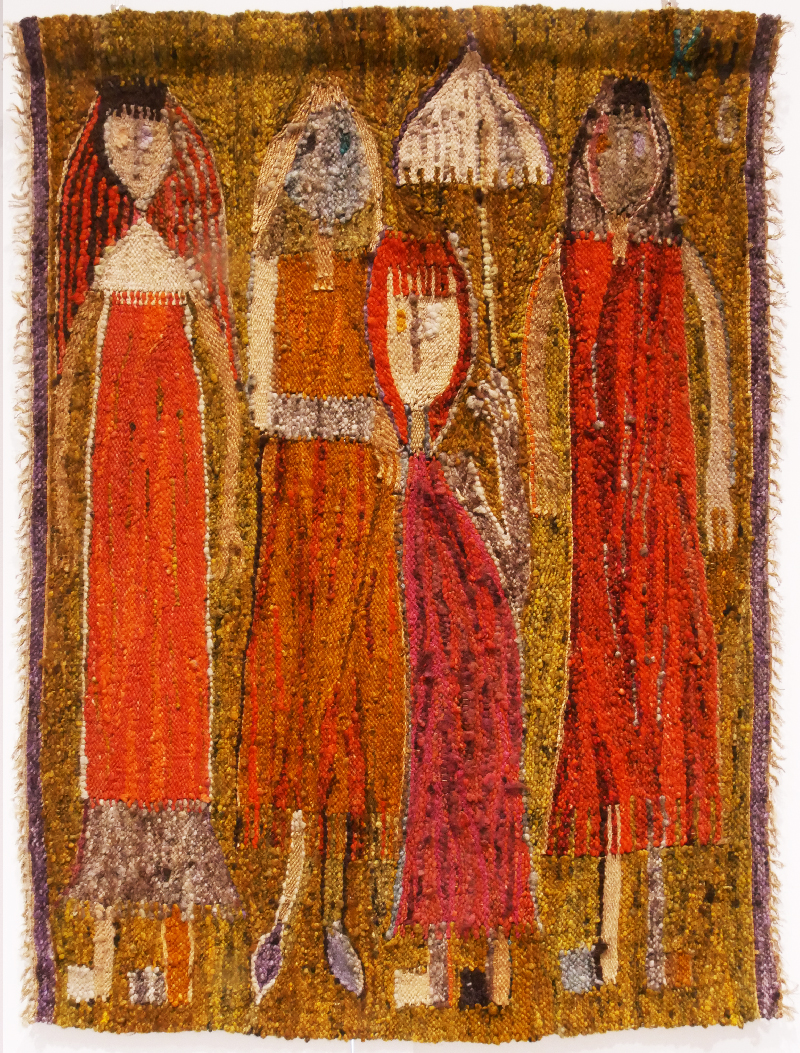
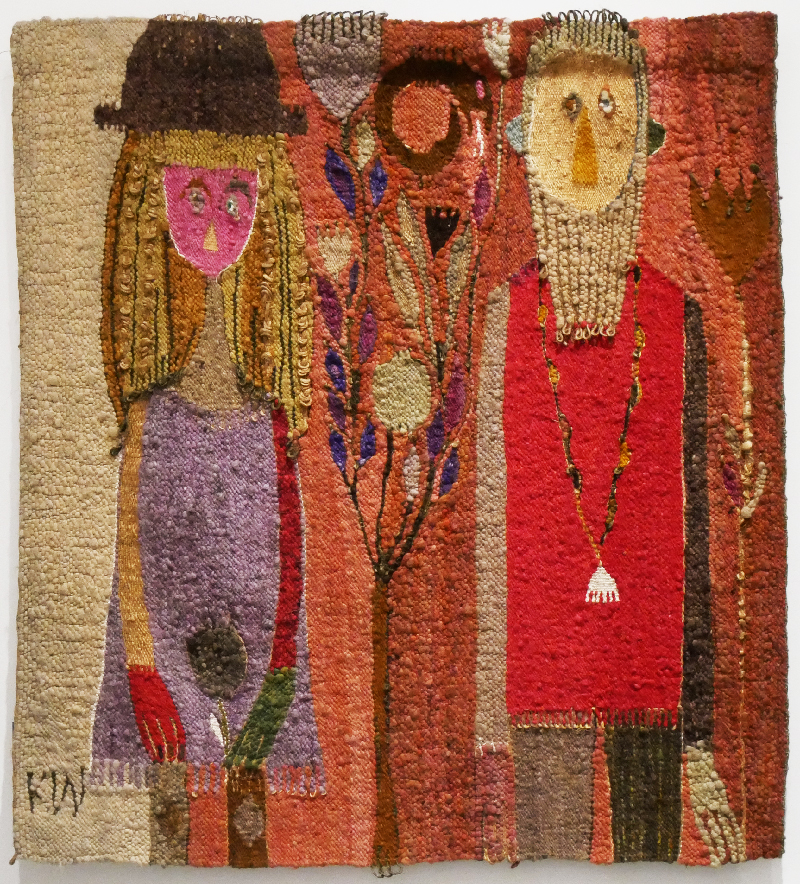
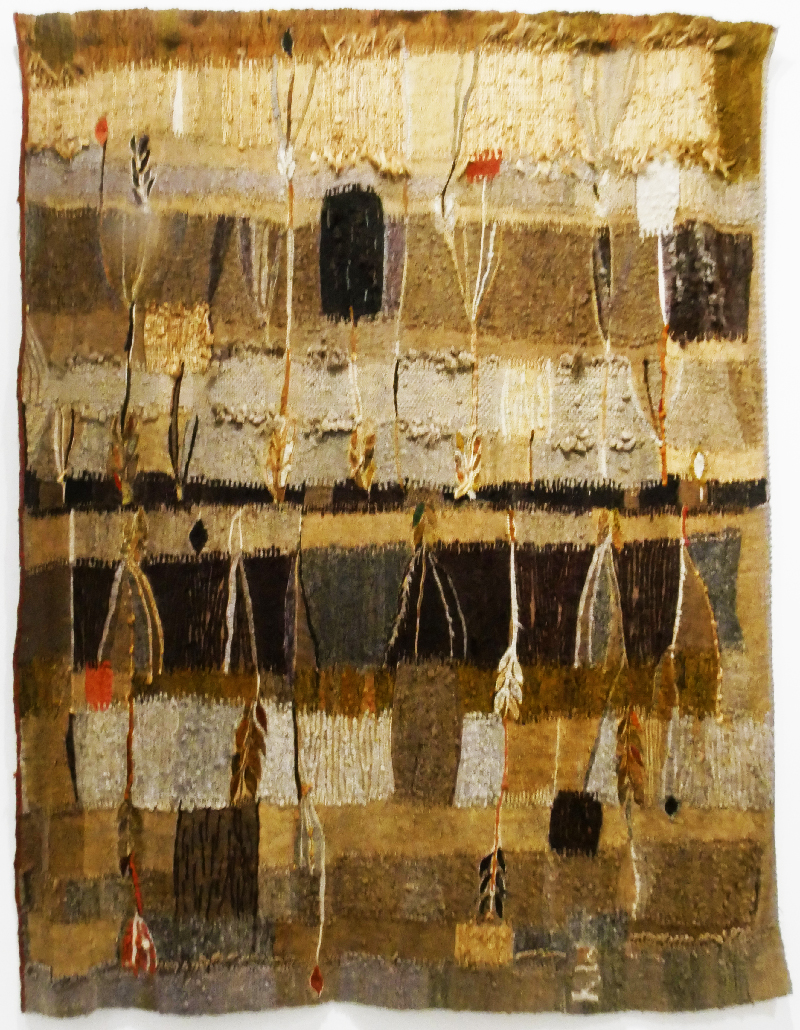
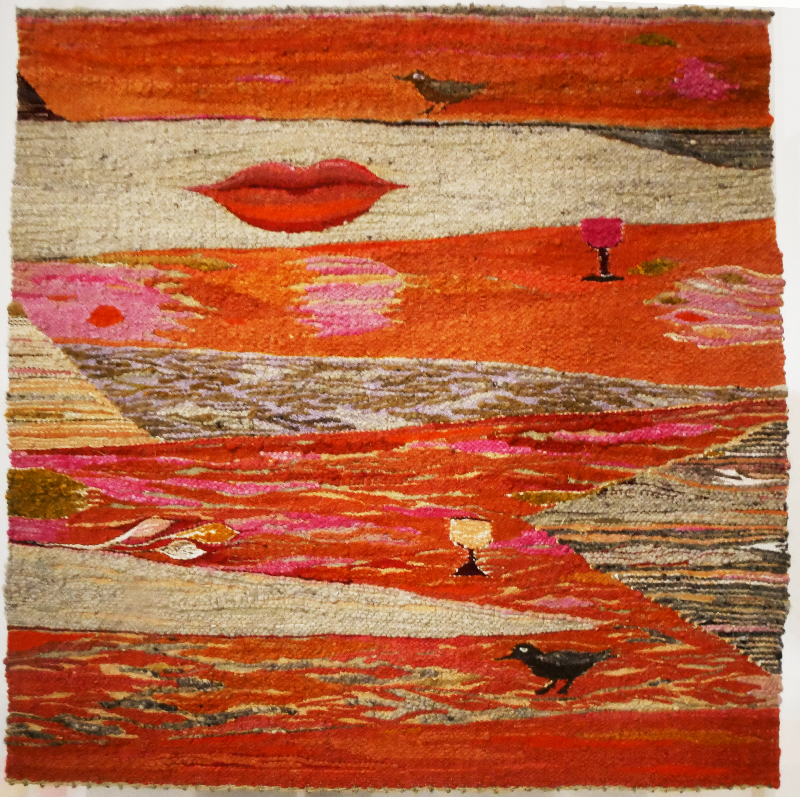
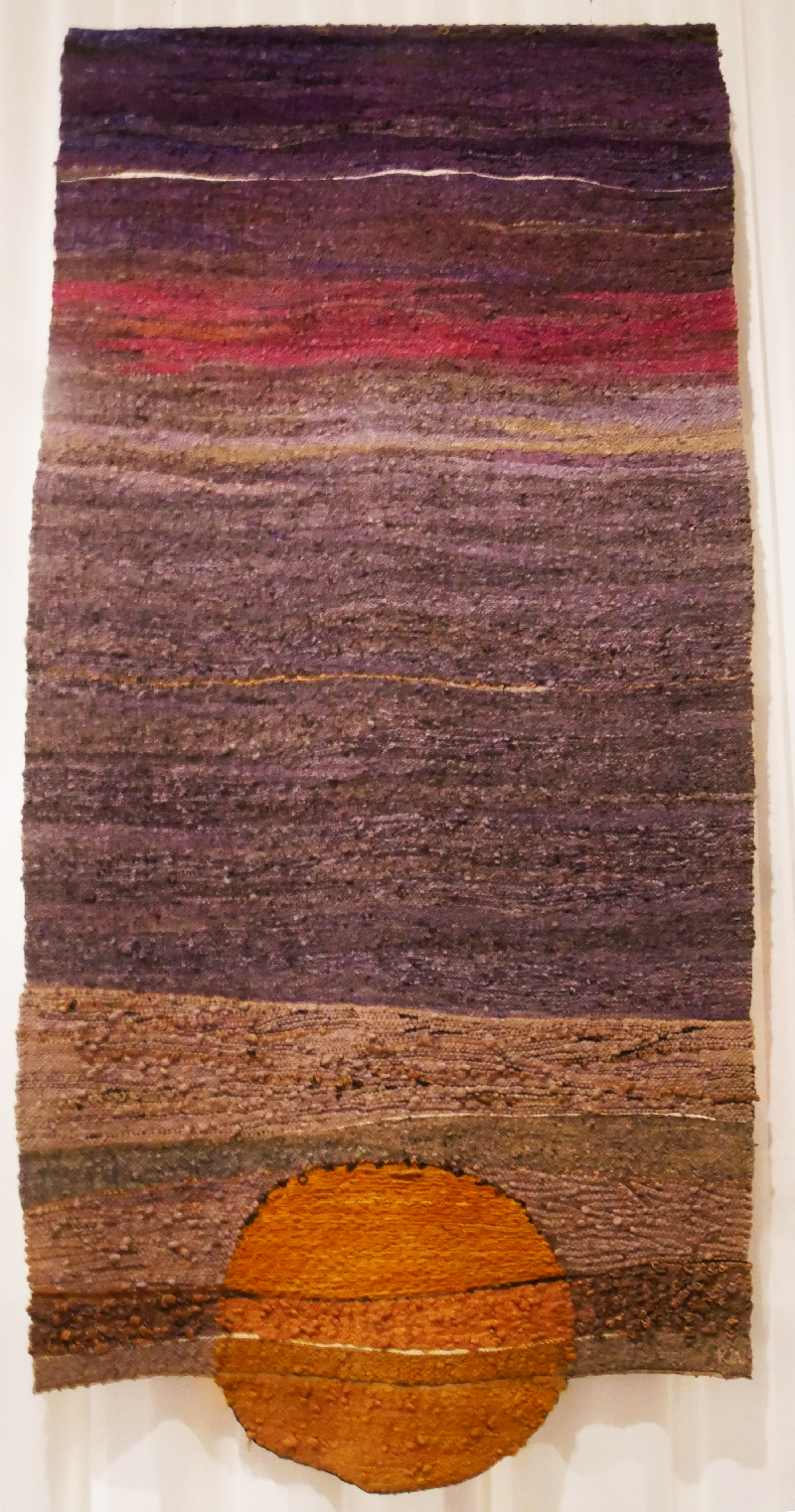
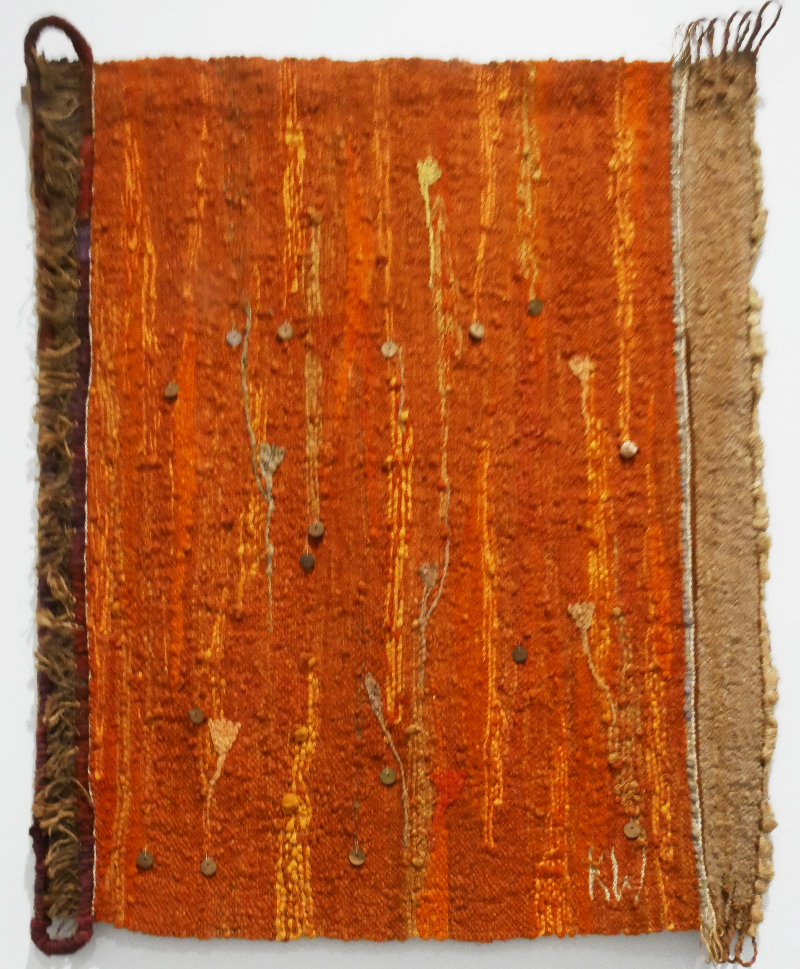
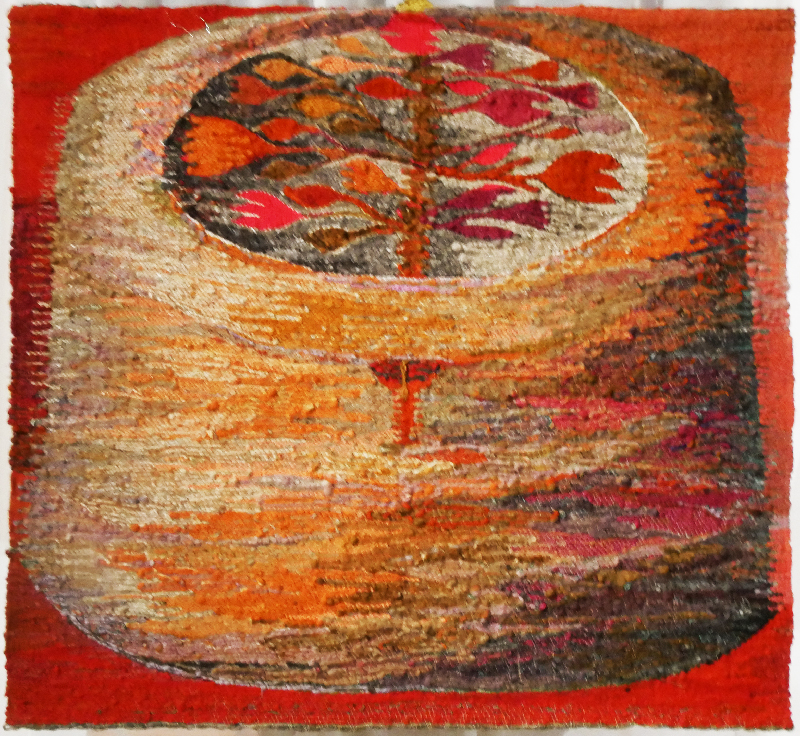
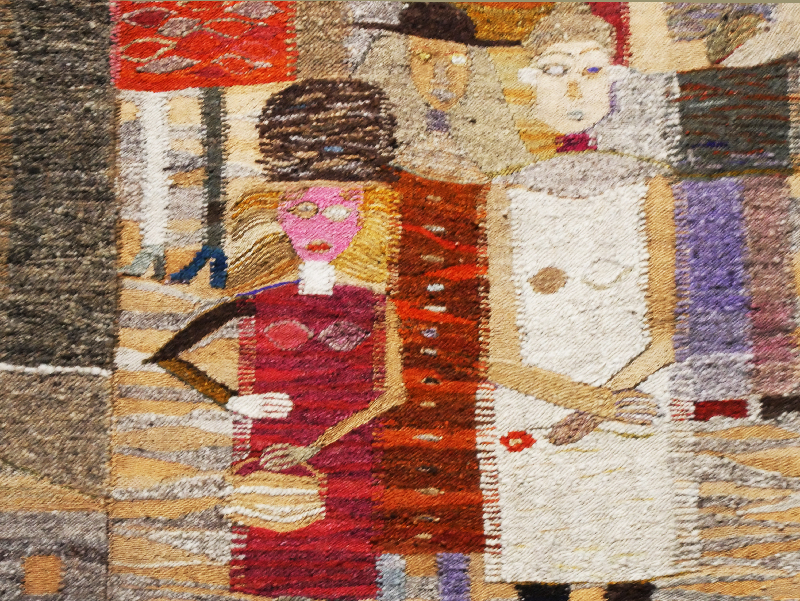
The exhibition I Do Not Exist for Myself is dedicated to the more than seventy-year career of Krystyna Wojtyna-Drouet, one of the key representatives of the Polish School of Textile Art. The occasion is her 100th birthday, celebrated in January 2026. The show presents twenty works created between 1953 and 2018, complemented by rarely exhibited pieces from the artist’s private collection and documentation of her workshop practice.
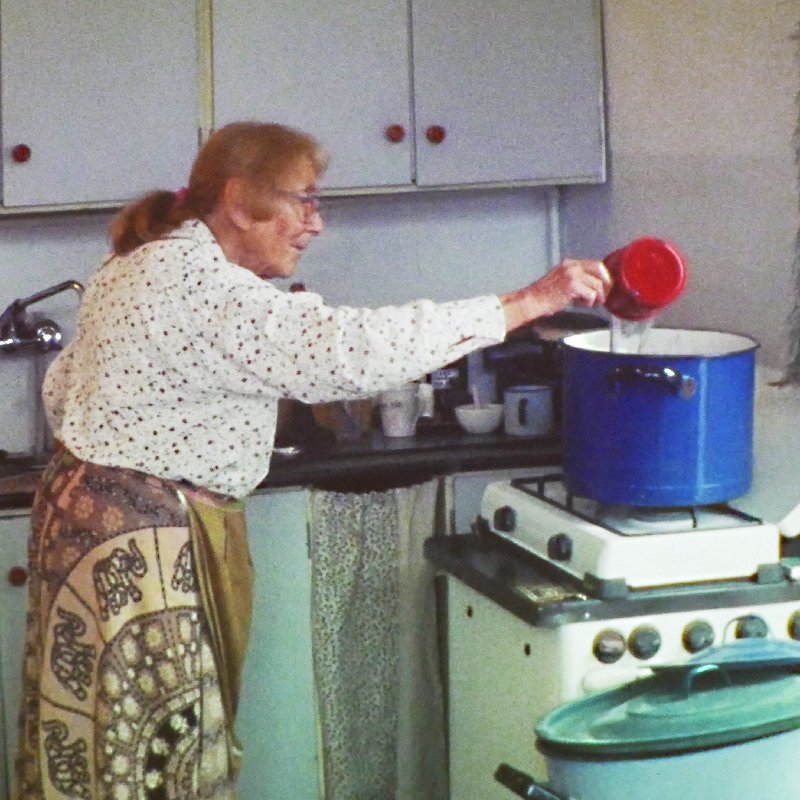
For me personally, this exhibition was of particular importance. In 1965, in Eindhoven, I encountered Polish textile art for the first time – including works by Wojtyna-Drouet. To meet her work again six decades later, and to see that she is still active at the loom, was deeply impressive. She appeared as a joyful and modest personality who wishes to share something of the inner pleasure she experiences in the weaving process with visitors. No contrived political slogans, no imposed messages—rather the communication of beauty, material presence, and sensory experience.
Wojtyna-Drouet studied from 1946 to 1953 at the Academy of Fine Arts in Warsaw in the studio of Eleonora Plutyńska. Together with other Polish textile artists, she formed part of the Polish School of Textile Art, that gained international recognition, particularly after the success of the Polish participation in the 1st International Tapestry Biennial in Lausanne in 1962. This generation was characterized by an experimental approach to material and form and by a strong emphasis on the plastic and textural qualities of the weave.
The loom has been her primary working tool since completing her diploma. She regards weaving as a meditative act. Working with natural, partially non-degreased mountain sheep’s wool, she dyes her materials using traditional plant-based recipes passed down by Wanda Szczepanowska. Her tapestries and kilims are created directly on the loom, without preparatory technical cartoons—developed intuitively and spontaneously in dialogue with the material. As she explains: “I do not use the painter’s approach when creating a work, because it makes no sense to duplicate painting in tapestry. In my opinion, form should not work against the natural rhythm of the warp yarns.”
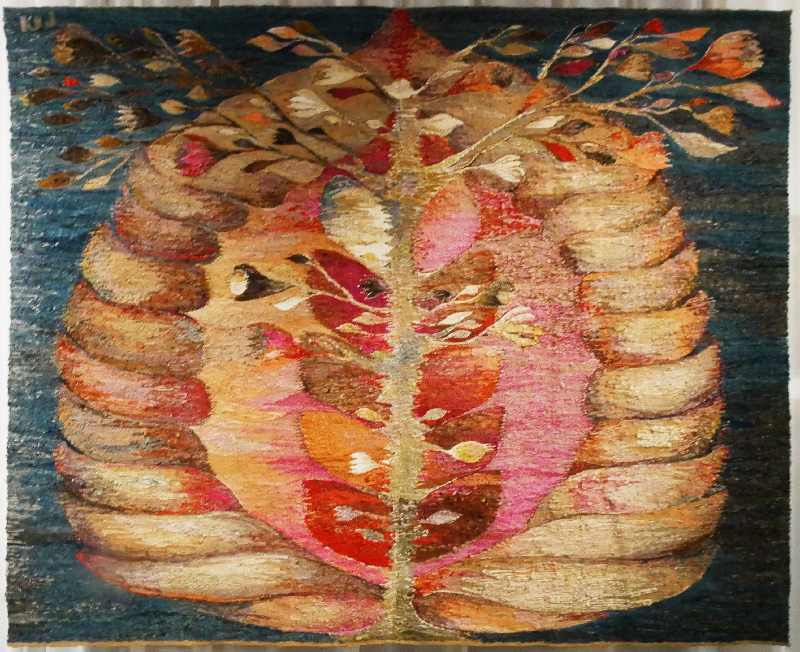
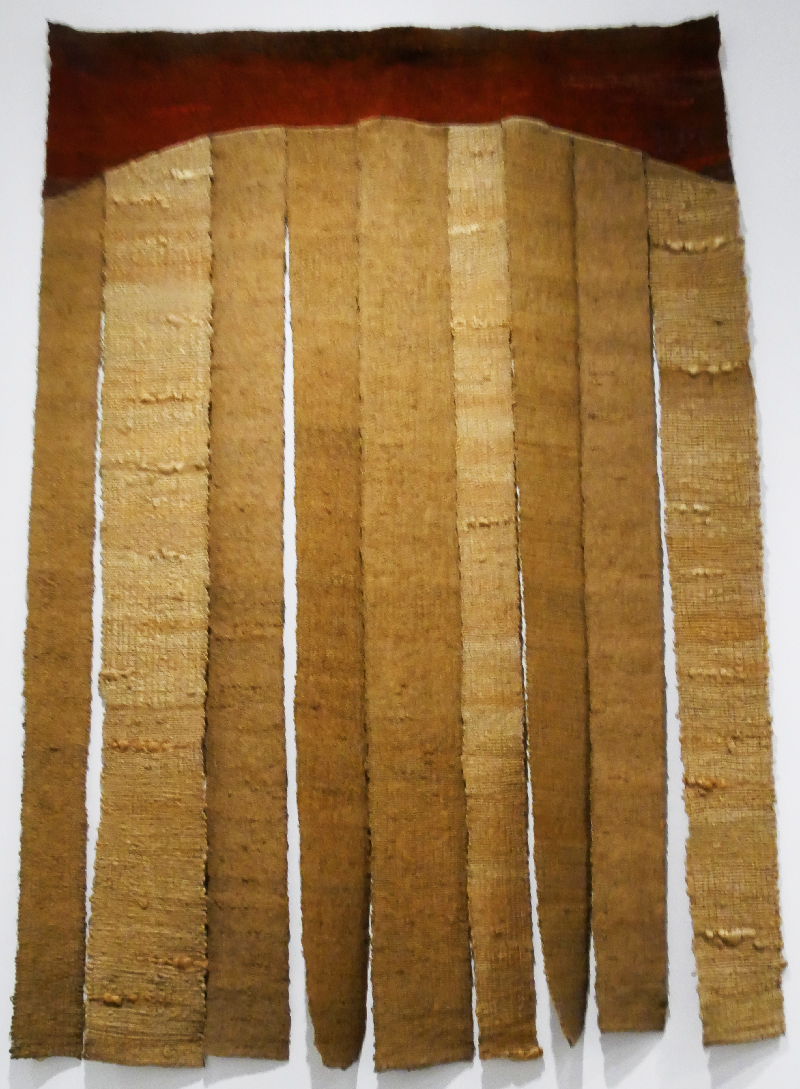
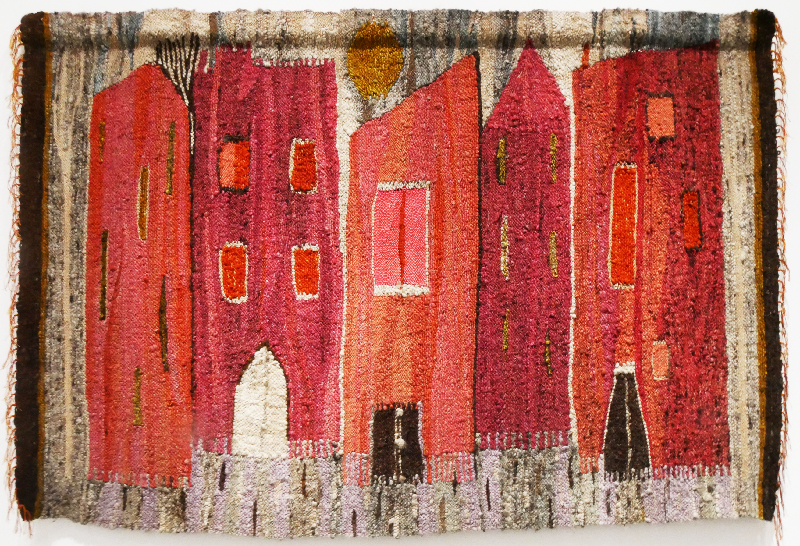
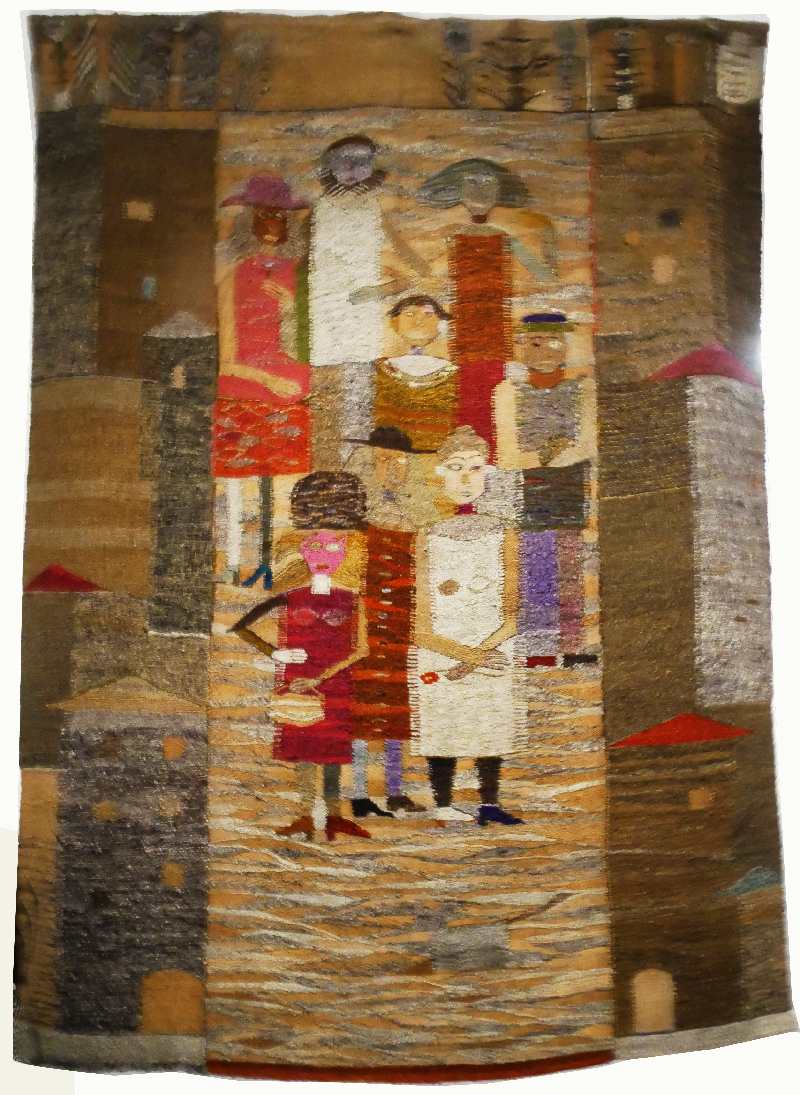
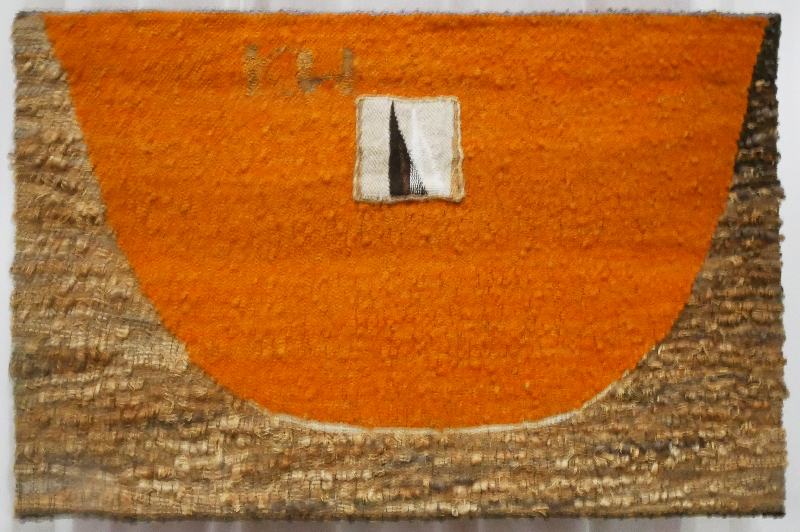
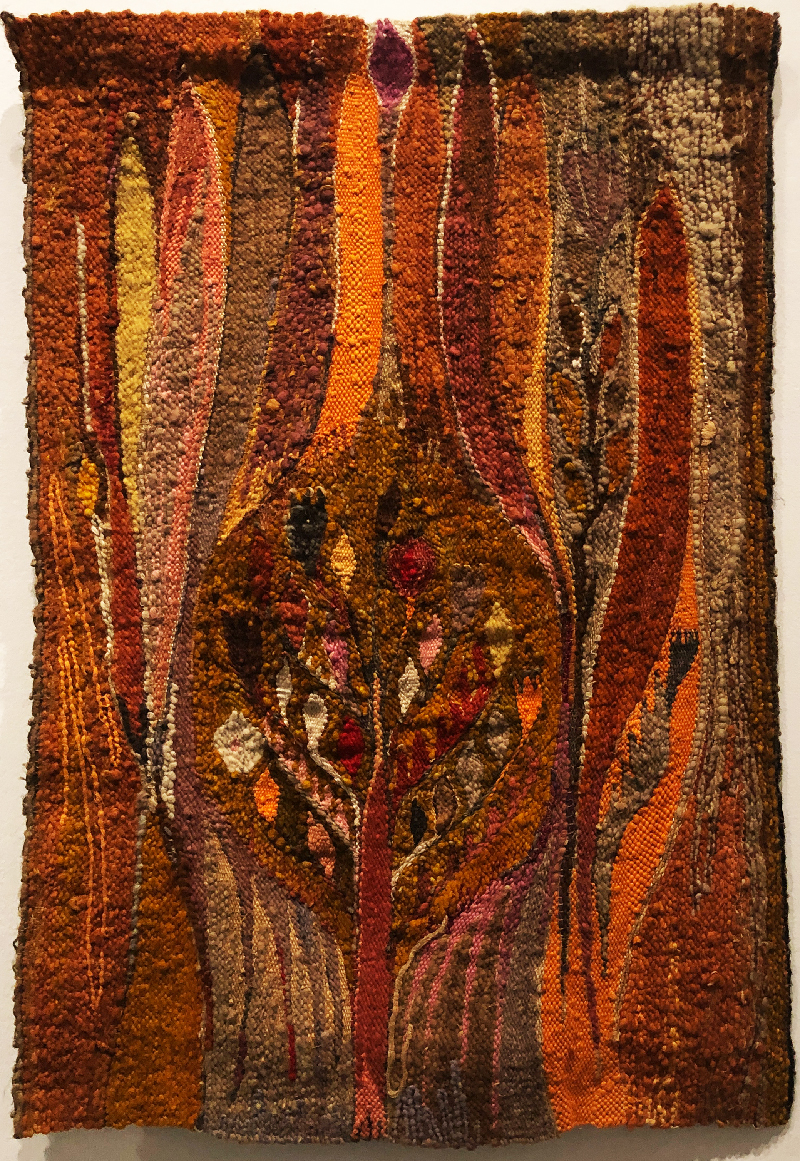
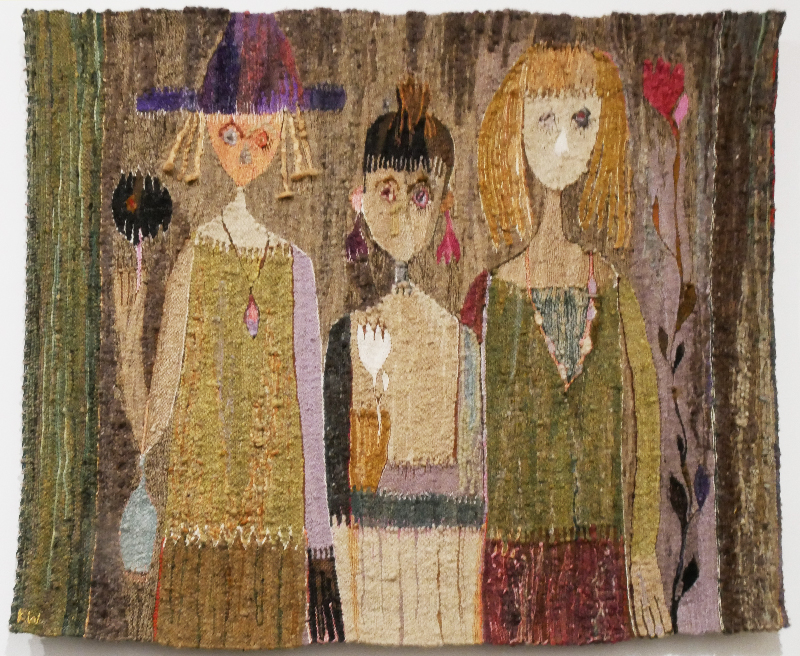
Among the works on view are large-scale textiles such as Alleyway (1962), created for the Lausanne Biennial, and Blooming Hills (1978), shown again after more than two decades. The exhibition traces the stylistic evolution of her practice—from figurative elements to abstract compositions and finally to the lyrical, reduced works of her later years. Particularly striking is her exploration of material contrasts: glossy sisal, raffia, or synthetic fibers combined with thick, hand-spun wool—a combination that Eleonora Plutyńska described as a “reflection.”
The exhibition adopts a process-oriented understanding of craft: form is not imposed by the maker but emerges through engagement with the material. In this sense, weaving becomes a way of inhabiting the world—a performative repetition of actions: stretching the warp, dyeing the wool, weaving daily, and removing the finished tapestry from the loom. Alongside the textiles, the presentation includes dyeing recipes, material samples demonstrating techniques such as Jacquard weaving and textile printing, as well as garments designed by the artist and made from handwoven fabric.
The international recognition of Wojtyna-Drouet’s work was significantly supported by the American collector J. L. Hurschler, whom she met in Lausanne in 1962. Through his patronage and the activities of the Hurschler Gallery in Pasadena, she gained international exposure and financial independence. This freedom enabled her to follow her creative impulses without constraint: “I am freed from obligations, and whatever blossoms in my imagination, whatever I feel…”
By juxtaposing finished textiles with documentation of workshop practice, the exhibition situates itself within the current revival of weaving techniques. It makes technical knowledge—refined over decades—accessible to a new generation. A catalogue accompanying the exhibition, based in part on an archival project initiated in 2025, will be published during the exhibition period and will be reviewed at a later date.
For me, this exhibition confirms that the renewed interest in craft as art has also led in Poland to a growing appreciation of handweaving. Wojtyna-Drouet’s work exemplifies an attitude in which craft is not merely a medium, but a way of being in the world—quiet, concentrated, and sustained by profound inner freedom.
Beatrijs Sterk 28 February, 2026
PS Some captions will be still added