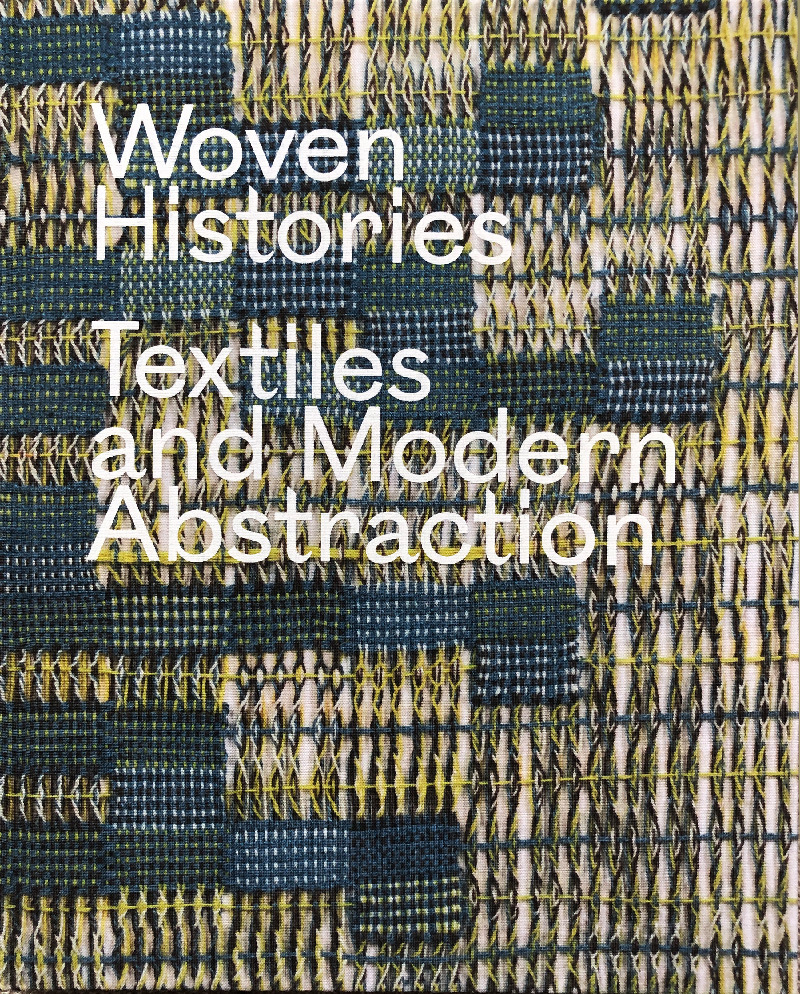
Woven Histories – Textiles and Modern Abstraction
Lynne Cooke, The University of Chicago Press, 2023, 283 pages, 179 colour photographs.
Exhibition catalogue accompanying four exhibitions: Los Angeles County Museum of Art, 2023–2024; National Gallery of Art, Washington, 2024; National Gallery of Canada, Ottawa, 2024–2025; The Museum of Modern Art, New York, 2025.
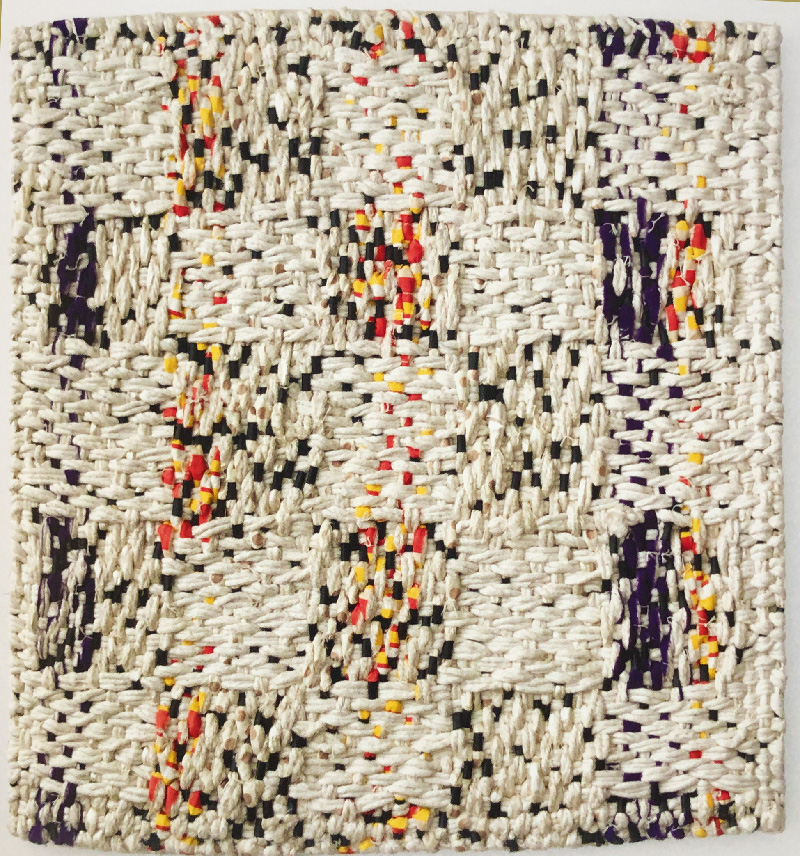
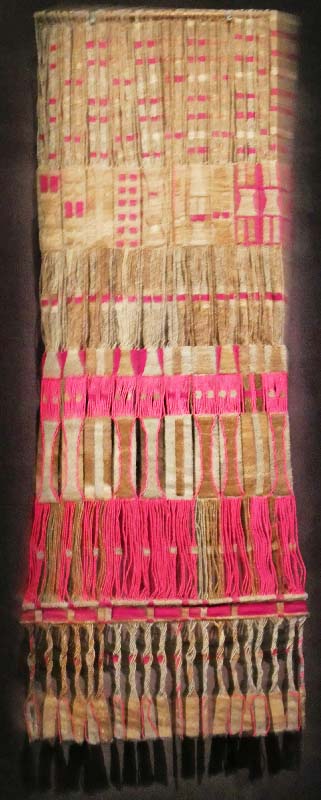
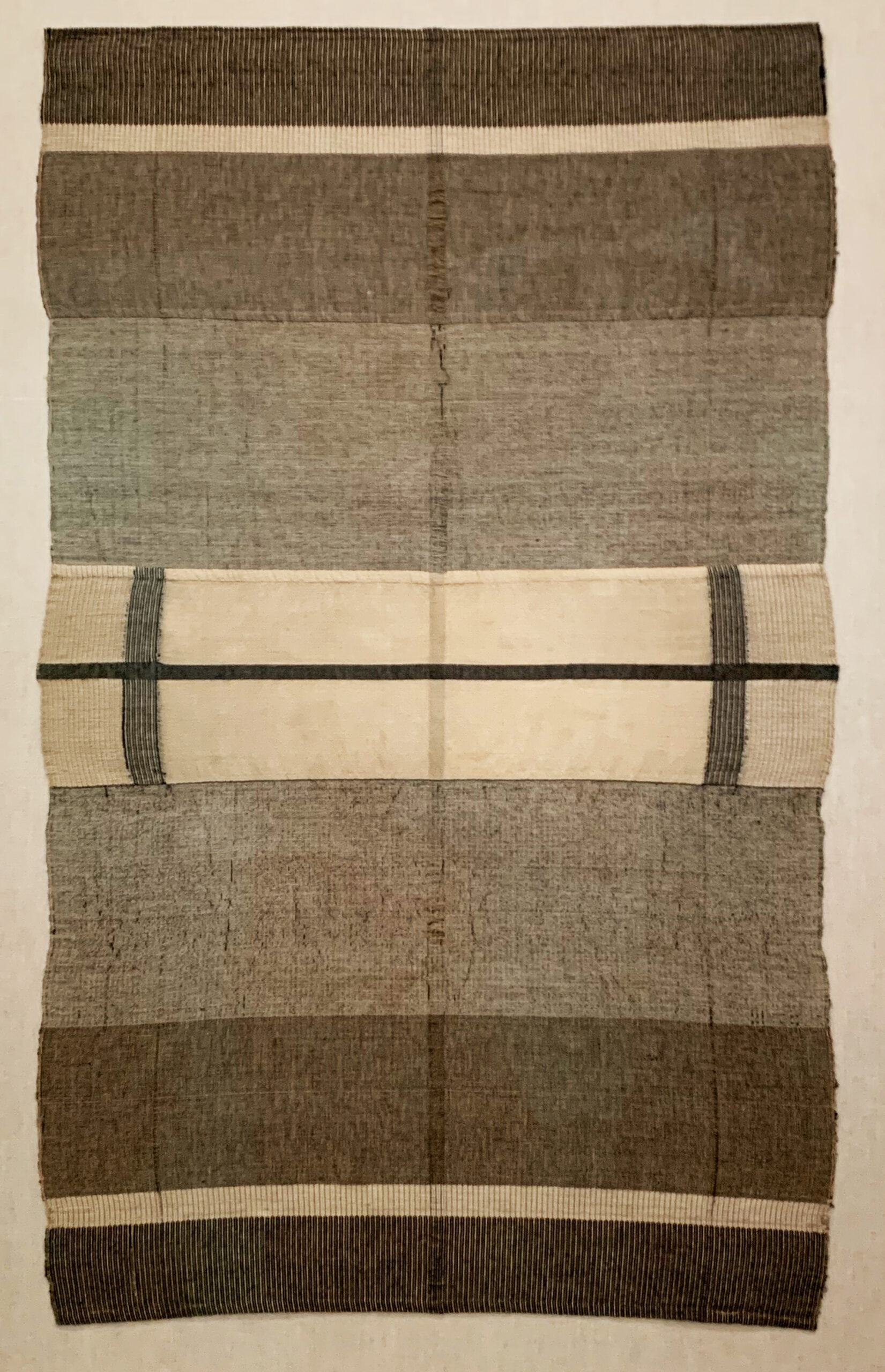
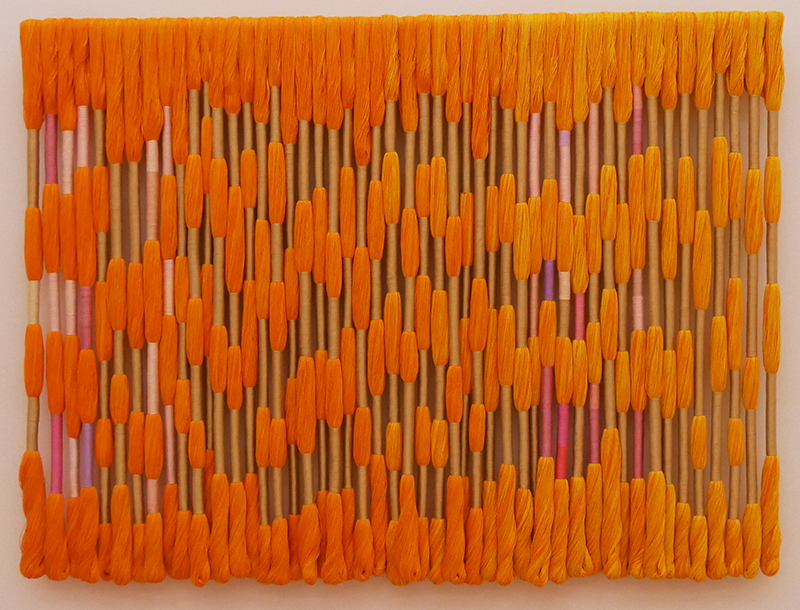
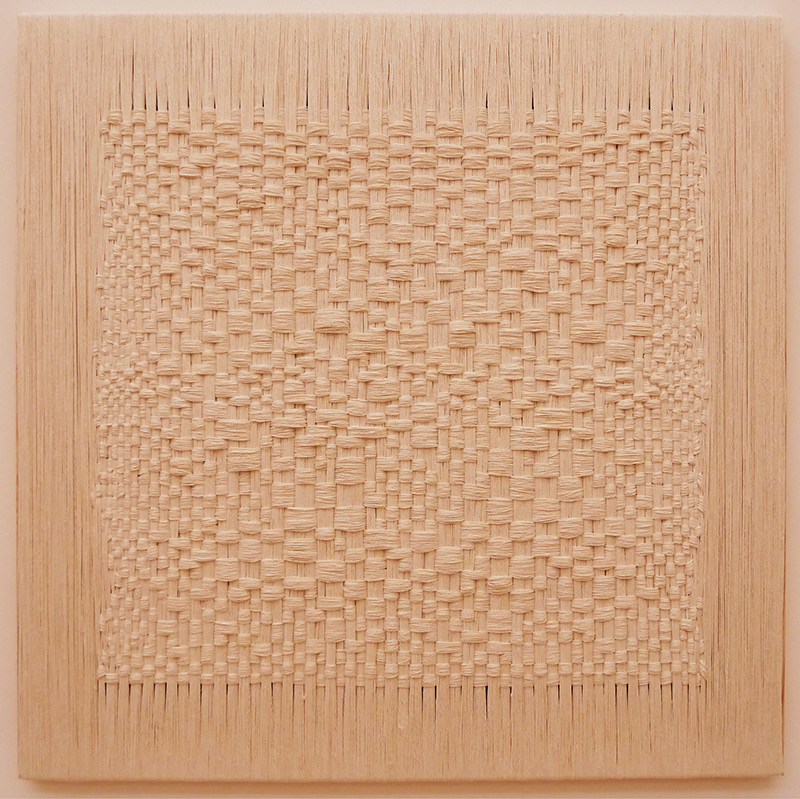
Lynne Cooke is a curator at the National Gallery of Art in Washington, and in this exhibition she intended to demonstrate that abstraction has found its place not only in painting, but also in the textile arts of modernism over the past 100 years. In this process, she challenges the idea that weaving is merely a practical textile technique, and instead traces the many forms that warp and weft can take when used by abstract artists in the last century. Once again, the old division between fine art and crafts is being called into question. Approximately 150 works in various media were on display, ranging from textiles and basketry to painting, drawing, and sculpture, in order to explore the correlations between abstract art, weaving, craft, and fashion.
This was an important show that I would have very much liked to see, but was unable to visit due to the distance and political situation. The exhibition did not aim to present textile art as a narrative addressing social problems, as was the case, for example, in Unravel: The Power and Politics of Textiles in Art at the Stedelijk Museum, Amsterdam (see my blog post of 11 January 2025). Instead, the curator chose a chronological approach, beginning in the 20th century with Sophie Taeuber-Arp, Sonia Delaunay and Anni Albers. Other artists were discussed as well; clothing was covered (e.g. Andra Zittel, Varvara Stepanova); important teachers were highlighted (Ed Rossbach); and the catalogue describes in detail how artists shifted their focus from designing for industry (Bauhaus and the Russian Revolution) to creating individual artworks. Rossbach, for example, conceived a piece of art that no machine could ever produce.
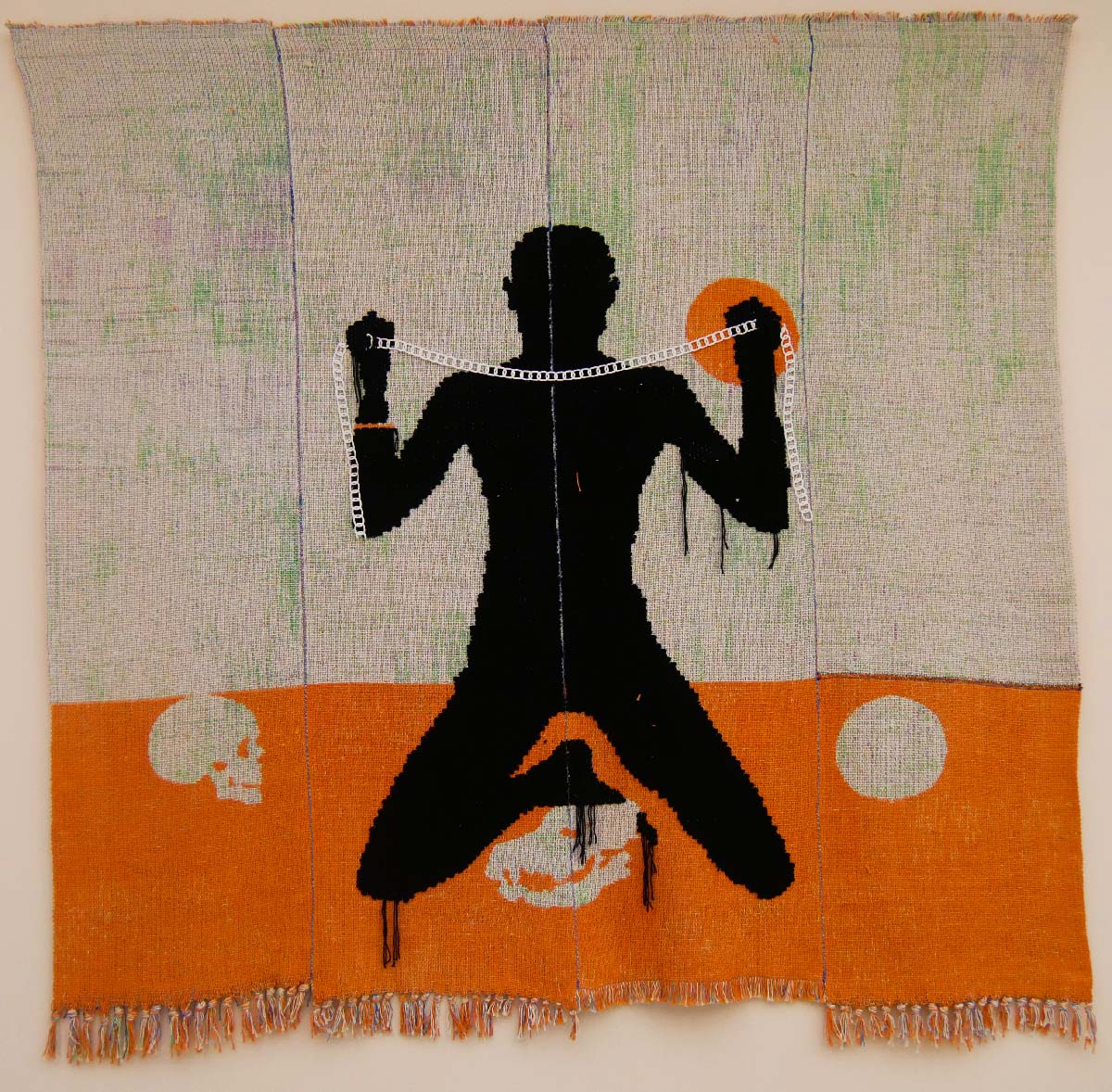
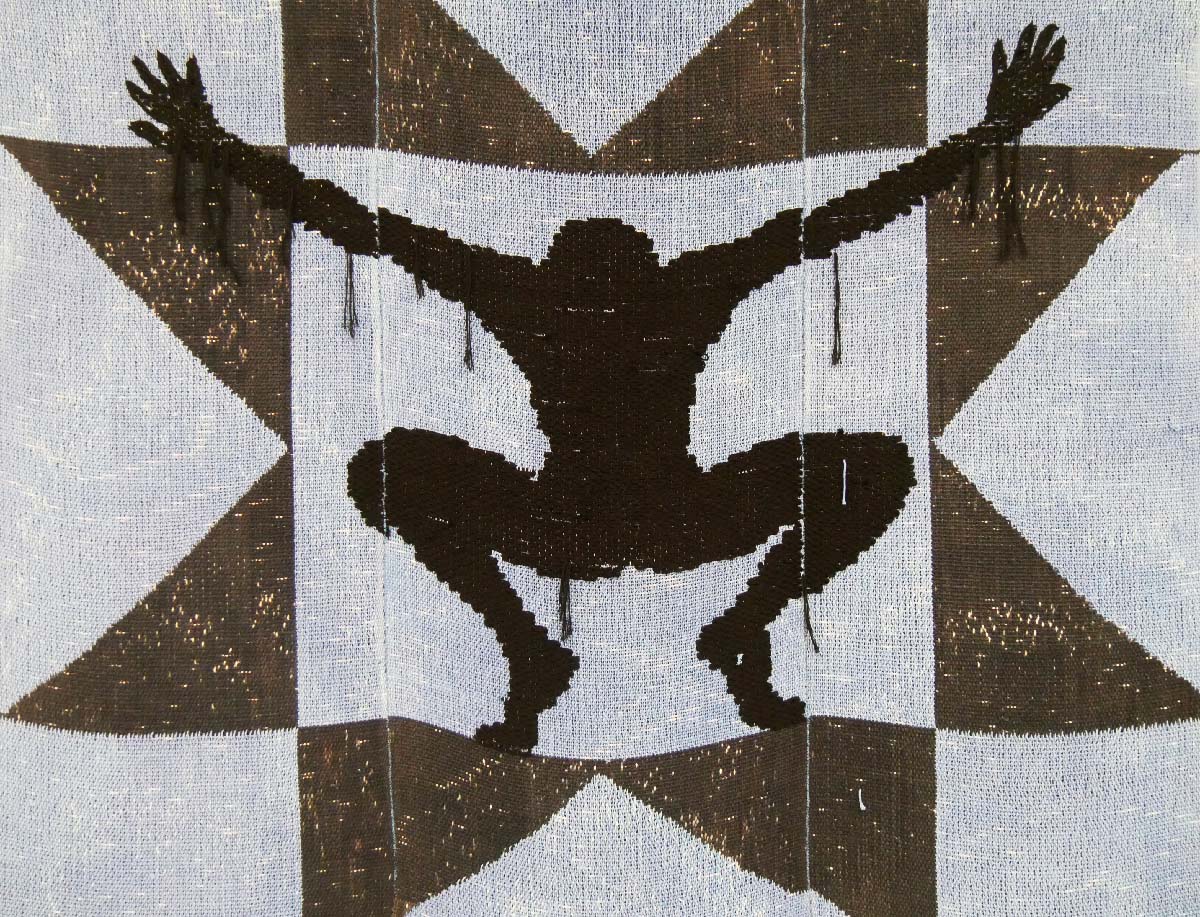
The curator took a broad view that included artists from Europe. For instance, she addressed the work of Rosemarie Trockel whom I finally came to understand better through the catalogue. Other outstanding artists were Gunta Stölzl, Olga de Amaral, Sheila Hicks, Kay Sekimachi, Lenore Tawney and Ruth Asawa. The younger generation were represented by Teresa Lanceta, Liz Collins, Igshaan Adams, Diedrick Brackens and many others.
The catalogue contains a lengthy essay by curator Lynne Cooke, “Modernist Histories: Braided, Interlaced and Aligned”, as well as five shorter contributions: Darby English, “Unavoidable Nature”; Briony Fer, “Textile Thinking”; Bibiana K. Obler, “Not Your Grandmother’s Labor”; Elissa Auther, “Dimensions of Basketry”; and Michelle Kuo, “Textility and Technology.”
The catalogue is highly recommended and available on Amazon for €54.60.